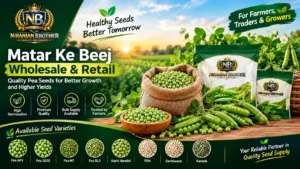
Pea Seeds Wholesale & Retail: Buy Quality Seeds for Better Growth and Higher Yields
Peas are one of the most popular vegetable crops grown by farmers, gardeners, and commercial growers. They are valued for their nutritional benefits, relatively simple cultivation requirements, and strong demand in fresh vegetable markets. However, successful pea cultivation begins with one important decision: choosing the right seeds.
Whether you are a commercial farmer looking to purchase seeds in bulk or a home gardener who needs a small packet, finding a reliable source for pea seeds wholesale & retail can make a significant difference to crop performance.
Good-quality pea seeds can provide better germination, healthier plants, uniform growth, and a more productive harvest. On the other hand, poor-quality or improperly stored seeds may result in low germination, weak seedlings, uneven crop development, and unnecessary losses.
This guide explains everything you need to know about buying Pea Seeds Wholesale & Retail Buy Quality Seeds for Better Growth and Higher Yields, including wholesale and retail purchasing, seed varieties, quality factors, storage, cultivation basics, and tips for selecting the right seeds.
Table of Contents
Why Choose Quality Pea Seeds?
The quality of seeds has a direct impact on the early stages of crop development. Even when soil, irrigation, fertilizers, and other farming practices are managed properly, poor-quality seeds can limit the potential of the crop.
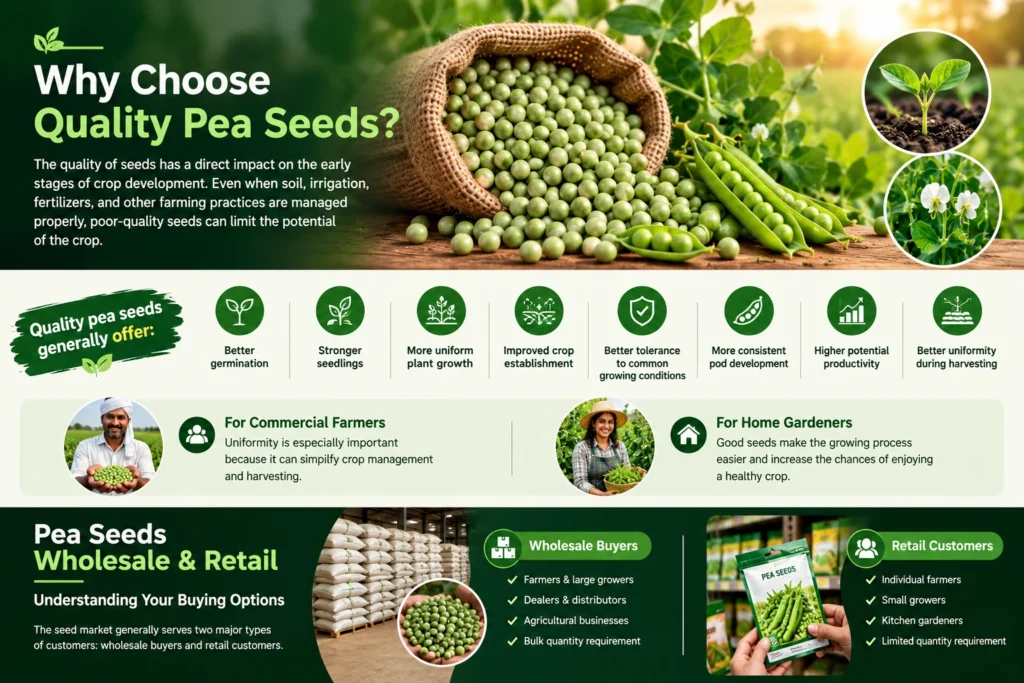
Quality pea seeds generally offer:
* Better germination
* Stronger seedlings
* More uniform plant growth
* Improved crop establishment
* Better tolerance to common growing conditions
* More consistent pod development
* Higher potential productivity
* Better uniformity during harvesting
For commercial farmers, uniformity is especially important because it can simplify crop management and harvesting.
For home gardeners, good seeds make the growing process easier and increase the chances of enjoying a healthy crop.
Pea Seeds Wholesale & Retail: Understanding Your Buying Options
The seed market generally serves two major types of customers: wholesale buyers and retail customers.
Pea Seeds Wholesale
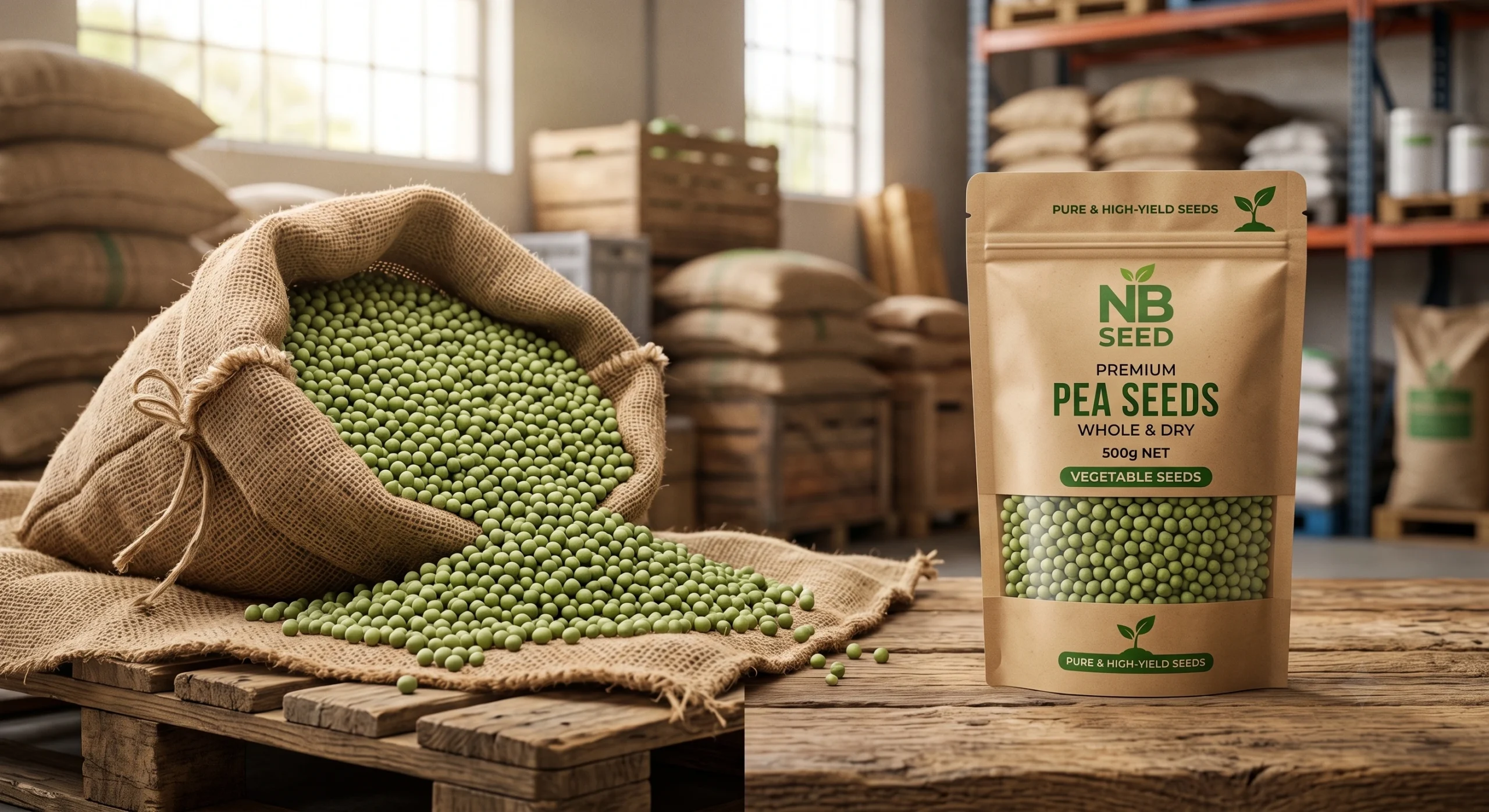
Wholesale pea seeds are generally purchased by farmers, agricultural businesses, distributors, nurseries, retailers, and large-scale growers who require larger quantities.
Buying pea seeds wholesale can be useful when you need enough seed for a larger area or want to maintain a regular supply.
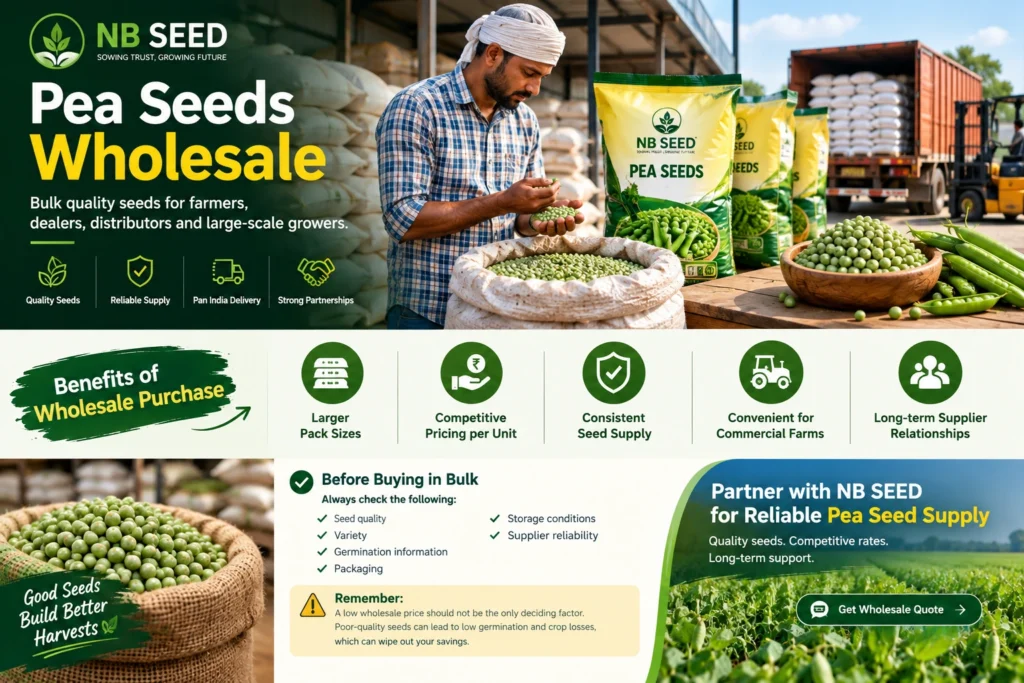
Wholesale purchasing may offer advantages such as:
* Larger pack sizes
* Competitive pricing per unit
* Consistent seed supply
* Convenient purchasing for commercial farms
* Opportunities for regular supplier relationships
Before purchasing in bulk, however, buyers should check seed quality, variety, germination information, packaging, storage conditions, and supplier reliability.
A low wholesale price should not be the only deciding factor. If the seeds have poor germination or questionable quality, the apparent saving can quickly disappear through crop losses.
Pea Seeds Retail
Retail pea seeds are ideal for home gardeners, kitchen gardens, small farms, hobby growers, and customers who only need a limited quantity.
Retail packs allow buyers to choose the amount they need without making a large investment.
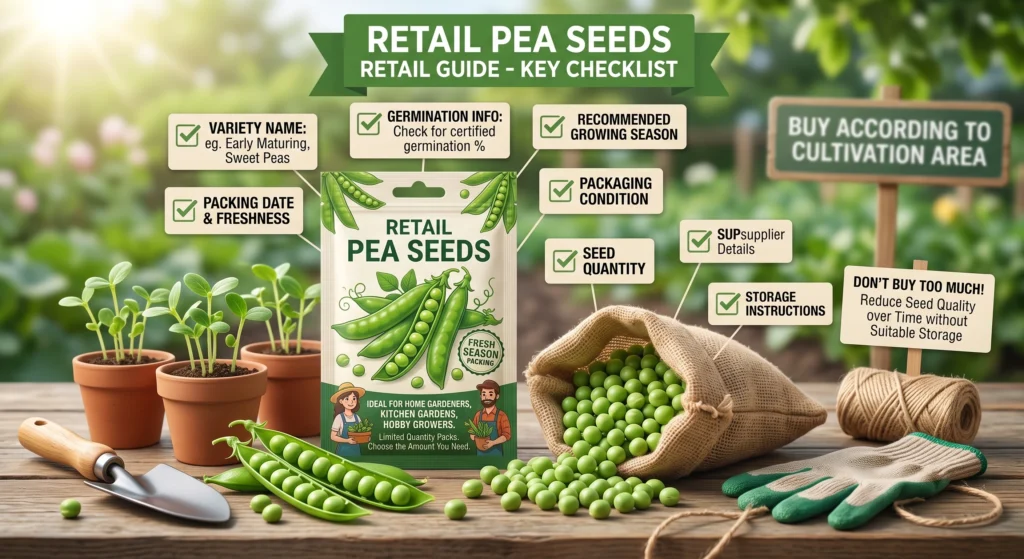
When buying pea seeds retail, check:
* Variety name
* Packing date
* Germination information where provided
* Recommended growing season
* Packaging condition
* Seed quantity
* Supplier details
* Storage instructions
Retail customers should also purchase seeds according to the area they intend to cultivate. Buying too much seed without suitable storage can reduce seed quality over time.
How to Choose the Best Pea Seeds
Choosing the right pea seeds involves more than simply selecting the cheapest packet. Different growing conditions and production goals may require different varieties.
Consider Your Growing Region
Climate is an important factor in pea cultivation. Peas generally perform well in cooler growing conditions, although the ideal planting period varies depending on the region and local climate.
Before buying seeds, consider:
* Local temperature
* Planting season
* Soil conditions
* Irrigation availability
* Expected harvest period
* Local pest and disease pressure
Farmers can also consult agricultural experts or reliable agricultural institutions for region-specific recommendations.
Select the Right Pea Variety
Pea varieties can differ in plant growth, pod characteristics, maturity period, and intended use.
Some varieties may be better suited for fresh consumption, while others can be selected according to specific commercial production requirements.
When purchasing seeds, ask the supplier about the characteristics of the variety and whether it is suitable for your growing conditions.
Check Seed Quality
Quality is one of the most important considerations when purchasing seeds.
Look for properly packed seeds from a reputable supplier. Seeds should be stored in appropriate conditions and protected from excessive moisture and heat.
Avoid purchasing packets that appear damaged, wet, poorly sealed, or improperly stored.
Benefits of Buying Pea Seeds from a Reliable Supplier
A dependable seed supplier can make the purchasing process considerably easier.
A good supplier should provide clear information about the product and help customers choose an appropriate variety.
Consistent Product Quality
Reliable suppliers generally maintain better quality-control practices and appropriate storage conditions.
Variety Selection
A specialist seed supplier may offer several pea seed varieties for different farming requirements.
Wholesale Availability
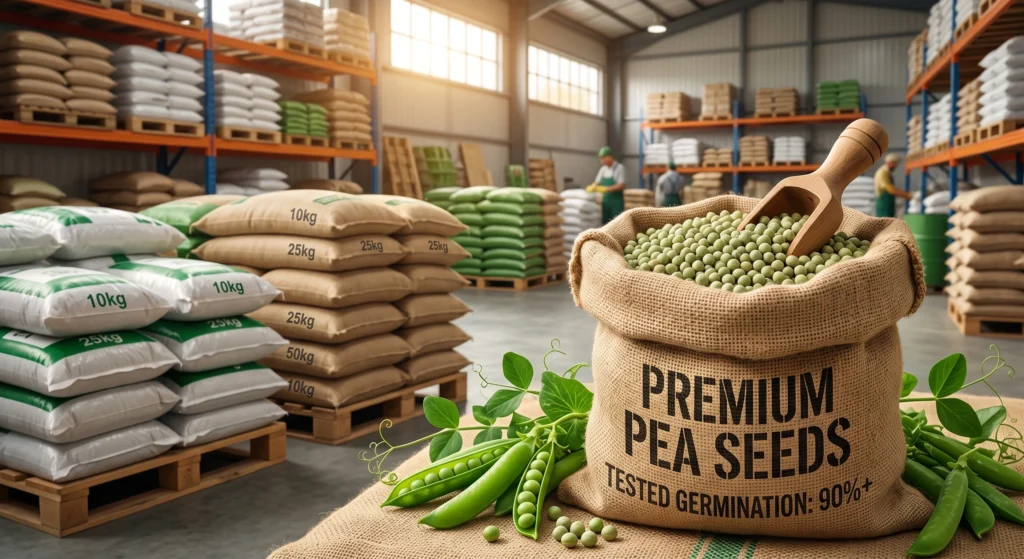
Commercial farmers and distributors can benefit from access to larger quantities.
Retail Convenience
Home gardeners and small growers can purchase smaller quantities without having to buy unnecessary stock.
Product Information
A reputable supplier should be able to provide information about seed variety, packaging, cultivation requirements, and other relevant details.
Pea Seeds Wholesale Buying Tips for Farmers
If you are buying pea seeds in bulk, take a little extra time before placing the order.
1. Estimate Your Seed Requirement
Calculate how much land you intend to cultivate and determine the appropriate seed quantity.
Avoid ordering significantly more than necessary unless you have suitable storage facilities.
2. Compare Suppliers
Do not compare suppliers only on price. Consider:
* Product quality
* Variety availability
* Packaging
* Supplier reputation
* Delivery reliability
* Customer support
* Wholesale pricing
3. Ask About Seed Specifications
For commercial cultivation, ask the supplier for relevant seed information and documentation where applicable.
4. Inspect Packaging
Bulk seed packages should be properly sealed and clearly labeled.
5. Plan Your Purchase in Advance
Ordering early can help avoid last-minute shortages during the planting season.
Pea Seeds Retail Buying Tips for Home Gardeners
Growing peas at home can be rewarding, especially when you harvest fresh pods directly from your garden.
If you are purchasing retail seed packets, consider the size of your growing space first.
For a small garden, you may only need a modest quantity.
Look for varieties that match your preferred growing conditions and intended use. If you are new to vegetable gardening, choose a variety with clear cultivation instructions.
How to Store Pea Seeds Properly
Proper storage is essential when seeds are not going to be used immediately.
Seeds should generally be protected from excessive moisture, heat, and direct sunlight.
Keep Seeds Dry
Moisture can negatively affect seed storage quality. Store unopened seed packages in a dry location.
Avoid Excessive Heat
High temperatures can reduce seed longevity. Choose a cool and stable storage environment whenever possible.
Protect the Packaging
Keep the original packaging intact until you are ready to use the seeds.
For bulk quantities, use appropriate storage containers and follow the supplier’s recommendations.
Basic Guide to Growing Peas
Once you have purchased suitable pea seeds, proper cultivation practices are essential.
Prepare the Soil
Peas generally perform best in well-drained soil. Prepare the planting area by removing weeds and breaking up compacted soil.
Organic matter can be incorporated into the soil when appropriate.
Sow the Seeds
Planting depth and spacing should follow the recommendations for the selected variety and local growing conditions.
Avoid overcrowding because plants need sufficient space for healthy development and air movement.
Provide Appropriate Water
Peas need adequate moisture for germination and growth, but excessive water can create problems, especially in poorly drained soil.
Maintain consistent moisture while avoiding waterlogging.
Provide Support When Needed
Some pea varieties produce climbing vines. These plants may benefit from trellises, sticks, netting, or another suitable support system.
Providing support can keep plants upright and make harvesting easier.
Manage Weeds
Weeds compete with pea plants for water, nutrients, light, and growing space.
Regular weed management during the early stages of crop growth can help plants establish successfully.
Common Mistakes to Avoid When Buying Pea Seeds
Even experienced growers can make mistakes when purchasing seeds.
Here are some common issues to avoid.
Buying Only on Price
The cheapest seeds are not necessarily the best value. Seed quality and suitability should be considered alongside price.
Ignoring the Variety
Different varieties have different characteristics. Always make sure the selected variety matches your production requirements.
Buying from Unreliable Sources
Unknown or poorly established sellers may provide inadequate product information or questionable storage conditions.
Purchasing Damaged Packages
Do not ignore damaged or poorly sealed seed packaging.
Storing Seeds Incorrectly
Even good-quality seeds can deteriorate if exposed to unfavorable storage conditions.
Why Demand for Peas Remains Strong
Peas are widely used as a fresh vegetable and in a variety of household and commercial food preparations. Their nutritional value and versatility contribute to continued consumer demand.
For farmers, this can make pea cultivation an attractive option when the crop is suitable for their local conditions and market.
However, profitability depends on many factors, including:
* Seed cost
* Yield
* Labor
* Irrigation
* Fertilizer and crop-management expenses
* Pest and disease management
* Transportation
* Local market prices
Farmers should therefore evaluate their local market and production costs before planting on a commercial scale.
Why Buy Pea Seeds Wholesale & Retail from a Trusted Source?
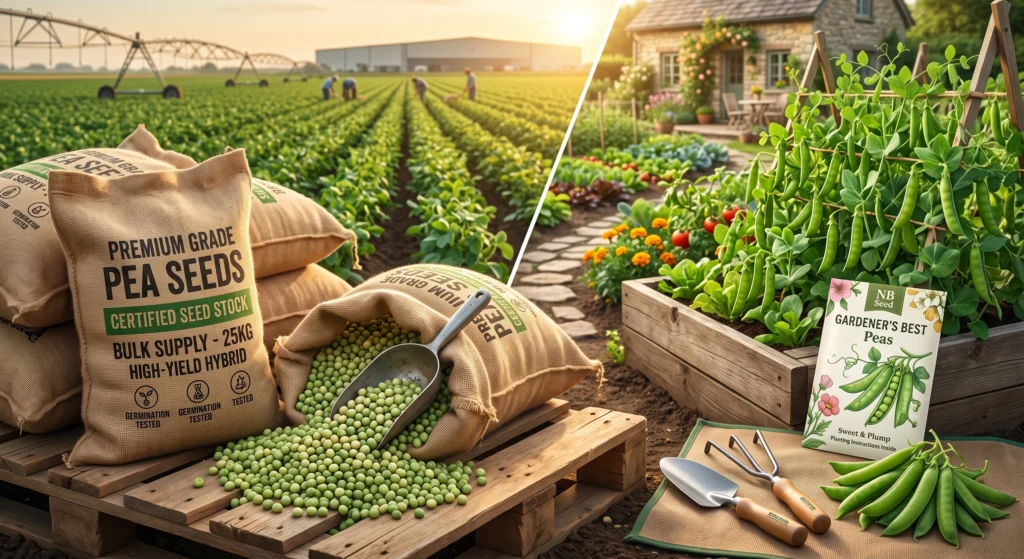
Whether you are purchasing one packet for a backyard garden or several kilograms for commercial cultivation, the supplier you choose matters.
A trusted supplier can provide a better purchasing experience by offering clearly labeled products, appropriate packaging, useful product information, and dependable customer service.
For wholesale customers, a reliable supplier can also help establish a consistent supply chain.
For retail customers, clear instructions and suitable product options can make gardening easier.
The best approach is to look beyond the keyword pea seeds wholesale & retail and evaluate the actual quality, suitability, and reliability of the product.
Frequently Asked Questions About Pea Seeds Wholesale & Retail
What are pea seeds wholesale?
Pea seeds wholesale are seeds sold in larger quantities, typically for commercial farming, distributors, retailers, nurseries, and large-scale growers. Wholesale purchasing can be useful for customers who require a substantial quantity of seed.
Can I buy pea seeds in retail quantities?
Yes. Retail pea seeds are commonly available in smaller packages and are suitable for home gardens, kitchen gardens, small farms, and hobby growers.
How do I choose the best pea seeds?
Choose seeds according to your local climate, planting season, soil conditions, intended use, and preferred variety. Purchase from a reputable supplier and check the packaging and product information.
Are wholesale pea seeds cheaper?
Wholesale purchases can have a lower cost per unit compared with small retail packs, although pricing depends on quantity, variety, supplier, season, and market conditions.
How should I store unused pea seeds?
Store unused seeds in a dry, cool, and protected environment. Keep them away from excessive moisture, heat, and direct sunlight, and follow the storage instructions provided by the seed supplier.
Can pea seeds be used for home gardening?
Yes. Many pea varieties are suitable for home gardens. Choose a variety appropriate for your climate and available growing space.
What makes quality pea seeds important?
Quality seeds can provide better germination and more uniform crop establishment. Starting with good-quality seed can make crop management easier and improve the chances of achieving a healthy harvest.
Where can I find reliable pea seeds wholesale & retail?
Look for established seed suppliers that provide clear information about varieties, packaging, seed quality, and cultivation requirements. Compare suppliers before making a bulk purchase.
What should farmers check before buying pea seeds wholesale?
Farmers should consider variety suitability, seed quality, quantity requirements, packaging, supplier reputation, storage conditions, price, and delivery arrangements.
Are pea seeds suitable for commercial farming?
Peas can be grown commercially where climate, soil, irrigation, production costs, and market demand are suitable. Farmers should evaluate local conditions and market opportunities before investing in large-scale cultivation.
Conclusion
Choosing the right seeds is one of the most important steps toward successful pea cultivation. Whether you are a commercial farmer searching for pea seeds wholesale or a home gardener looking for Pea Seeds Wholesale & Retail Buy Quality Seeds for Better Growth and Higher Yields retail, quality and suitability should always come before price alone.
The right pea seed variety, proper storage, suitable soil preparation, adequate irrigation, and good crop management can all contribute to healthy plant growth and a successful harvest.
When searching for pea seeds wholesale & retail, choose a supplier that offers dependable products, clear information, suitable packaging, and reliable service. Buying from a trustworthy source can help farmers and gardeners start their crop with greater confidence.
With careful seed selection and proper cultivation practices, peas can be a productive and rewarding crop for both commercial growers and home gardeners.