
Do Pea Seeds Need Light to Germinate? Complete Guide for Farmers and Gardeners
Do Pea Seeds Need Light to Germinate?
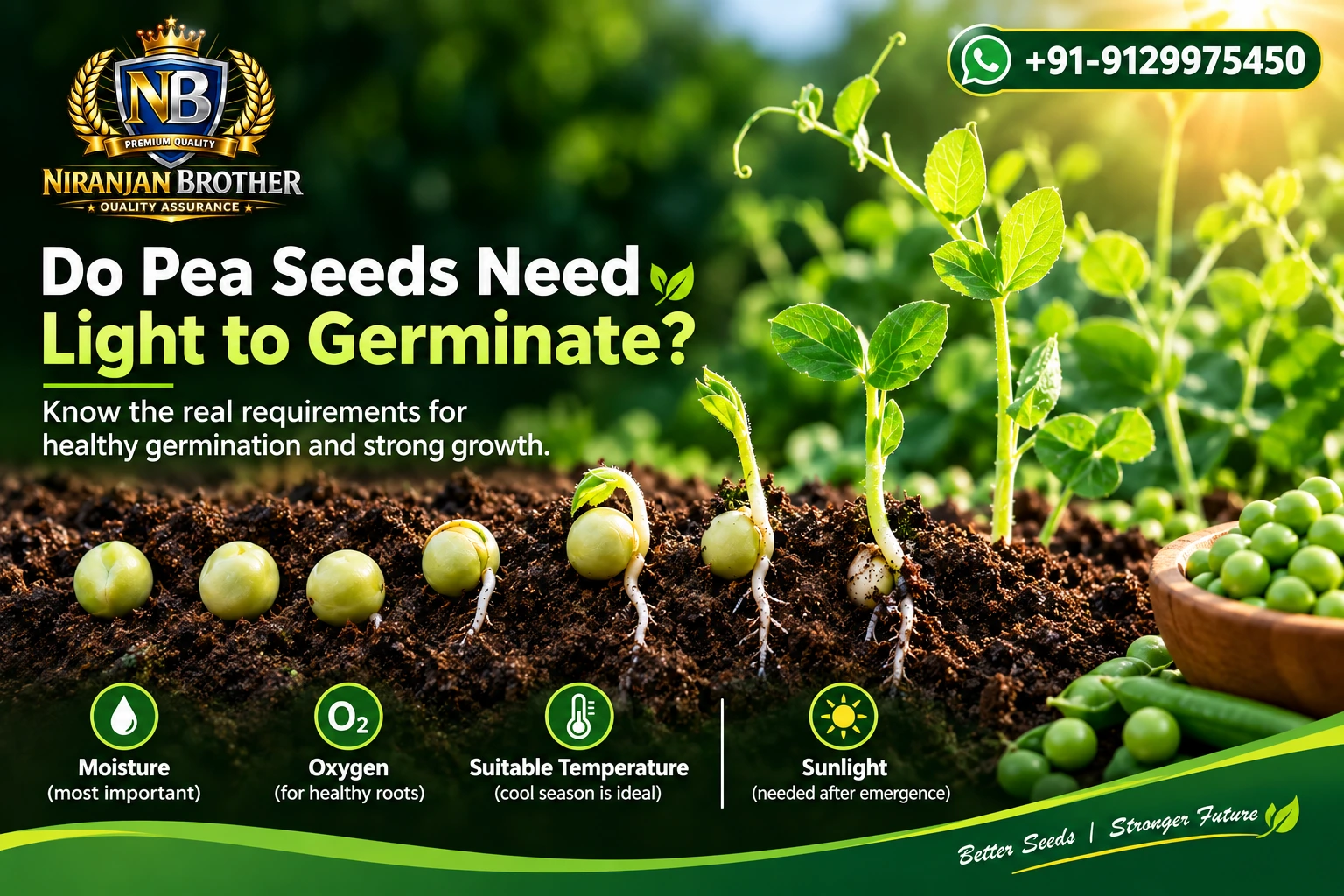
One of the most common questions asked by new gardeners and farmers is: Do pea seeds need light to germinate?
The simple answer is no.
Pea seeds do not need direct sunlight to start germinating. In fact, during the early stage, the seed mainly needs adequate moisture, oxygen and a suitable temperature. Once the seed absorbs enough water, the germination process starts inside the seed.
However, there is an important difference between seed germination and plant growth.
A pea seed can germinate without direct sunlight, but once the young plant comes out of the soil, sunlight becomes very important for healthy growth. The growing pea plant needs light for photosynthesis, leaf development, stronger stems and eventually flowering and pod formation.
This is why pea cultivation is slightly different from what many beginners assume. You do not need to expose newly sown pea seeds to strong sunlight just to make them germinate. Instead, the focus should be on proper moisture, suitable soil conditions and a cool growing environment.
For commercial farming and home gardening, understanding this difference can help avoid common mistakes such as over watering seeds or disturbing the soil repeatedly to check whether germination has started.
Table of Contents
Do Pea Seeds Need Light During Germination?
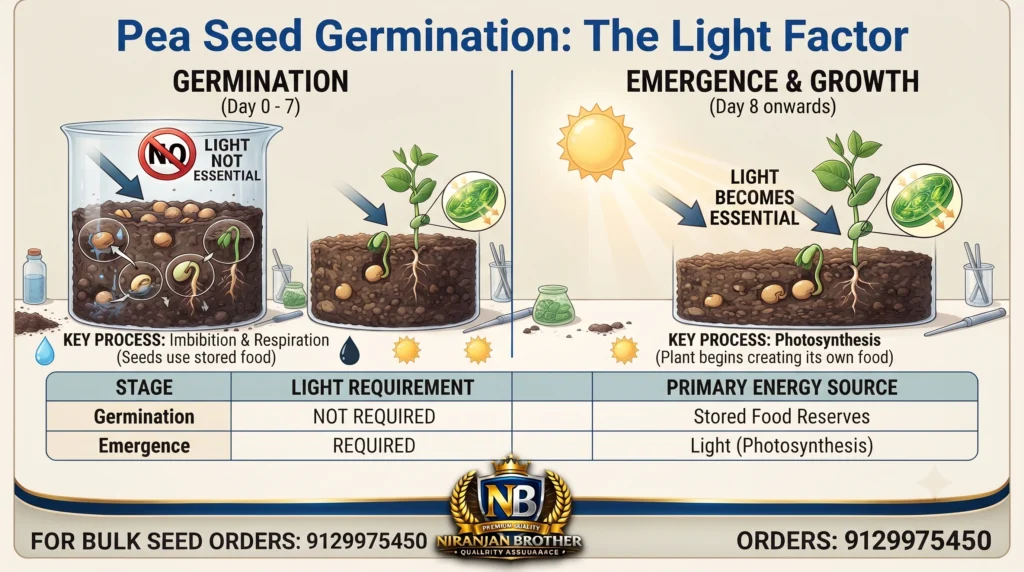
No, pea seeds generally do not require light during the actual germination process.
When a dry pea seed is placed in suitable soil and receives enough moisture, it begins absorbing water. This process activates the biological activity inside the seed.
After absorbing water, the seed starts using its stored food reserves. The first root, called the eradicable, begins developing. Later, the shoot moves upward toward the soil surface.
At this stage, the seed itself does not depend on sunlight to begin this process.
This means you can sow pea seeds:
- In a field
- In a garden bed
- In a pot
- In a grow bag
- In suitable loose soil
The important thing is to provide the right growing conditions.
Once the shoot emerges above the soil, the situation changes. The young pea plant needs adequate light to continue healthy development.
So, the easiest way to remember it is:
Germination → Light is not essential.
After emergence → Light becomes essential for healthy plant growth.
What Do Pea Seeds Need to Germinate?
If light is not the main requirement, what actually helps pea seeds germinate?
There are several important factors.
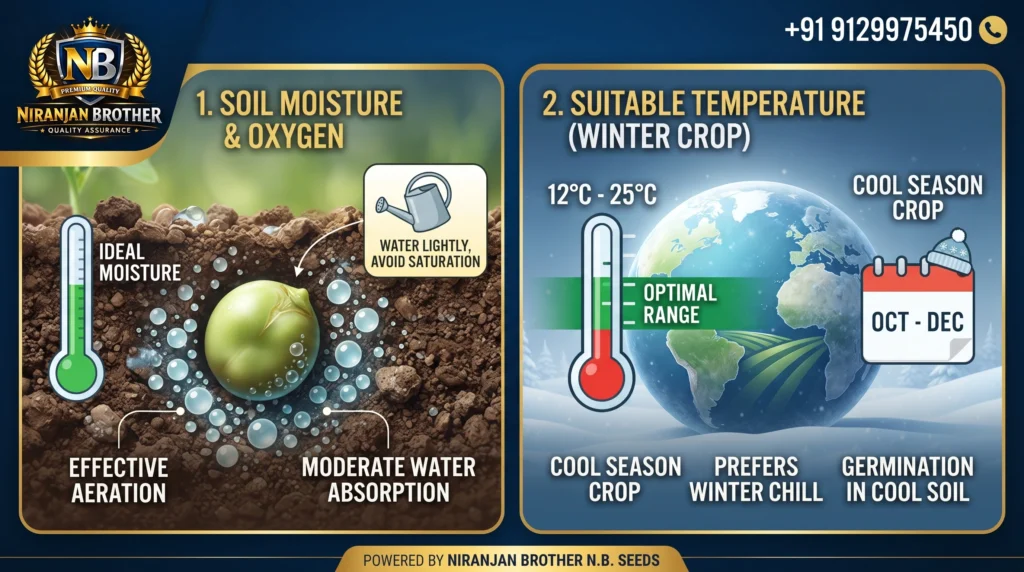
1. Moisture
Moisture is one of the most important requirements for seed germination.
A dry pea seed needs to absorb water before the internal germination process can begin. This is why completely dry soil is not suitable for newly sown pea seeds.
However, this does not mean that more water is better.
Too much water can be harmful.
When soil remains continuously saturated, the air spaces between soil particles can become filled with water. Seeds then have less oxygen available around them. Excess moisture can also increase the risk of seed and root problems.
The goal should be moist soil, not waterlogged soil.
A simple rule for home gardeners is:
Keep the soil lightly moist, but avoid standing water.
This is especially important when growing peas in pots or containers.
2. Oxygen
Seeds are living organisms. During germination, they need oxygen for respiration.
This is another reason why excessive watering can create problems.
If the soil is loose and well-drained, it usually provides better air movement around the seed.
For this reason, planting pea seeds in soil that remains constantly muddy or waterlogged is not a good practice.
ICAR’s field-pea guidance also emphasizes well-drained soil and avoiding conditions that reduce drainage and aeration.
3. Suitable Temperature
Peas are generally considered a cool-season crop.
This makes them particularly suitable for winter cultivation in many parts of India.
For many Indian growing regions, pea cultivation is commonly associated with the cooler months. ICAR guidance for field pea identifies 15 October to 15 November as a recommended sowing window for the referenced production conditions, while ICAR has also documented vegetable pea production beginning with sowing in late October. Actual sowing time can vary with location, variety and local weather.
This is one reason peas perform well during the winter season.
In areas such as Uttar Pradesh and other suitable regions, farmers commonly grow peas during the cooler part of the year.
The exact sowing period should always be adjusted according to the variety, local climate and farming conditions.
Does Sunlight Help Pea Seeds Germinate Faster?
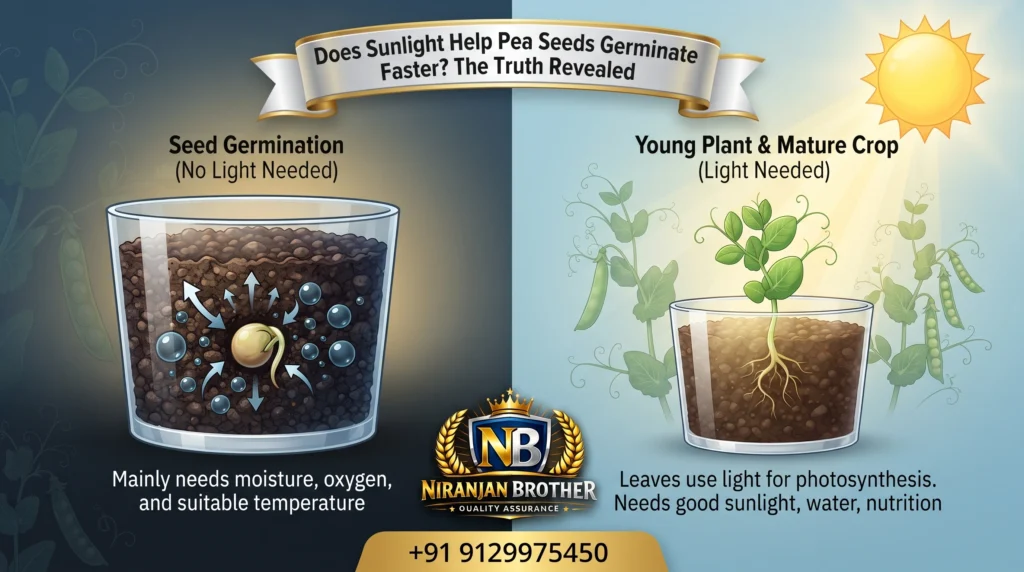
Not in the way many people think.
Putting freshly sown pea seeds under strong sunlight does not mean they will automatically germinate faster.
The seed first needs to absorb sufficient moisture and have suitable temperature and oxygen conditions.
However, sunlight becomes extremely important after germination.
Once the pea shoot comes above the soil, the plant starts developing leaves. Those leaves use light for photosynthesis.
Therefore, sunlight has a major role in the later stages of the crop.
This distinction is very important:
Seed: Mainly needs moisture, oxygen and suitable temperature.
Young plant: Needs adequate light for healthy growth.
Mature crop: Needs good sunlight along with suitable water, nutrition and growing conditions.
How Much Sunlight Do Pea Plants Need?
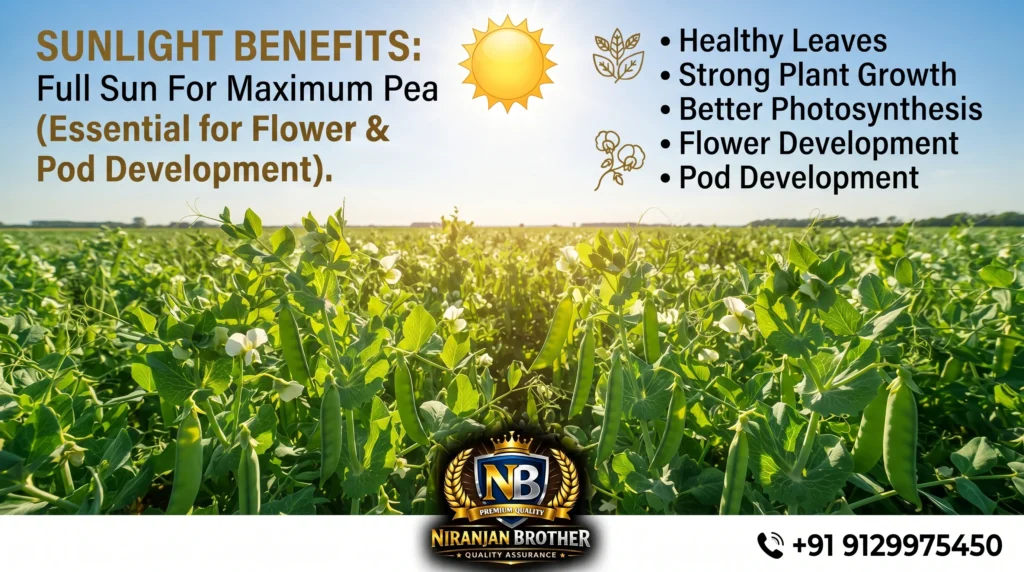
Although pea seeds do not need light to germinate, pea plants generally perform well when they receive plenty of sunlight.
Peas are commonly recommended for full-sun growing conditions. Utah State University Extension, for example, recommends full sun and well-drained soil for maximum pea yield.
This is particularly relevant for farmers growing peas for pods.
Good sunlight supports:
- Healthy leaves
- Stronger plant growth
- Better photosynthesis
- Flower development
- Pod development
- Overall crop performance
Therefore, after pea seedlings emerge, they should receive sufficient sunlight rather than being kept in a dark location.
Can Pea Seeds Be Grown in Full Sun?
Yes.
Pea crops can be grown in locations receiving good sunlight.
In fact, after the plants emerge, sunlight is an important part of successful cultivation.
However, remember that full sunlight and seed germination are two different requirements.
You do not need sunlight directly on the seed for germination.
The seed can be covered with soil at the appropriate depth. Once the seedling emerges, its leaves can receive sunlight.
This is the natural process followed by pea plants in agricultural fields.
Can You Grow Peas in a Pot?
Yes, peas can be grown successfully in pots and containers when suitable conditions are provided.
This makes peas a practical crop for:
- Home gardens
- Terrace gardens
- Kitchen gardens
- Large pots
- Grow bags
- Small garden spaces
The container should have proper drainage holes.
This is particularly important because excessive water can create problems around the seeds and roots.
When growing peas in a pot, focus on:
- Good-quality pea seeds
- Suitable soil
- Proper drainage
- Adequate moisture
- Sufficient sunlight after emergence
- Suitable support for climbing varieties
The basic principle remains the same as field cultivation.
Can Peas Grow in Different Types of Soil?
Peas are adaptable, but saying that peas can grow equally well in every type of soil would be misleading.
For good growth and production, soil condition still matters.
ICAR’s field-pea advisory recommends well-drained loamy soil, with a neutral pH range of about 6.5–7.5 for successful cultivation.
For home gardening, the practical objective is to provide soil that:
- Holds enough moisture
- Does not remain waterlogged
- Allows root growth
- Has reasonable fertility
- Provides good aeration
So, even if peas can tolerate a range of soil conditions, better soil preparation generally gives the crop a better growing environment.
How Much Water Do Pea Seeds Need?
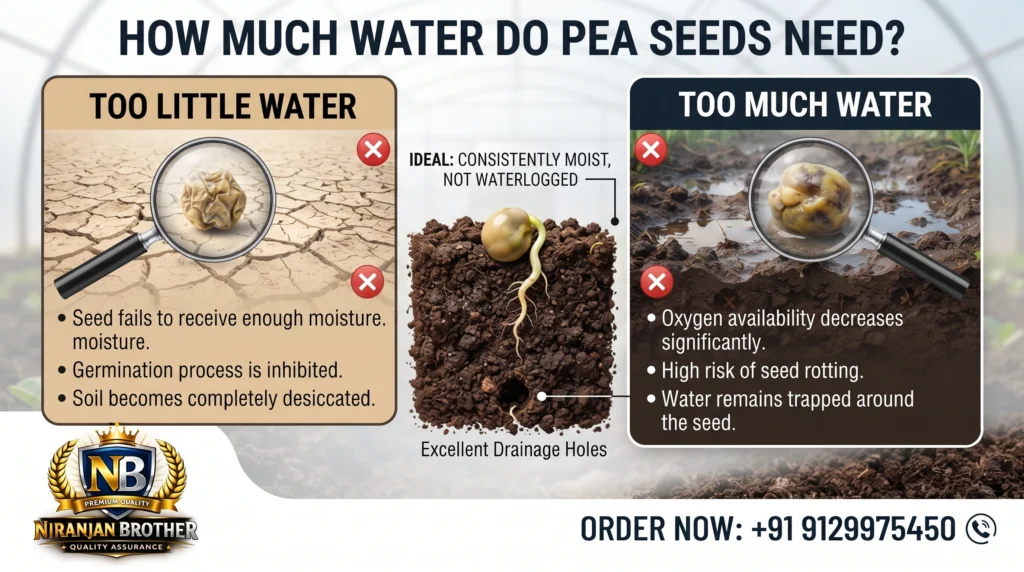
This is another area where beginners often make mistakes.
Newly sown pea seeds need moisture, but they do not need excessive water.
The soil should remain moist enough to support germination.
It should not remain flooded.
Too little water
If the soil becomes completely dry after sowing, the seed may not receive enough moisture to begin germination properly.
Too much water
If water remains around the seed for too long, oxygen availability can decrease and the risk of seed-related problems can increase.
Therefore, the target is somewhere between these two extremes.
Moist soil is good. Waterlogged soil is not.
For container gardening, always check whether excess water can escape through the drainage holes.
How to Germinate Pea Seeds Successfully
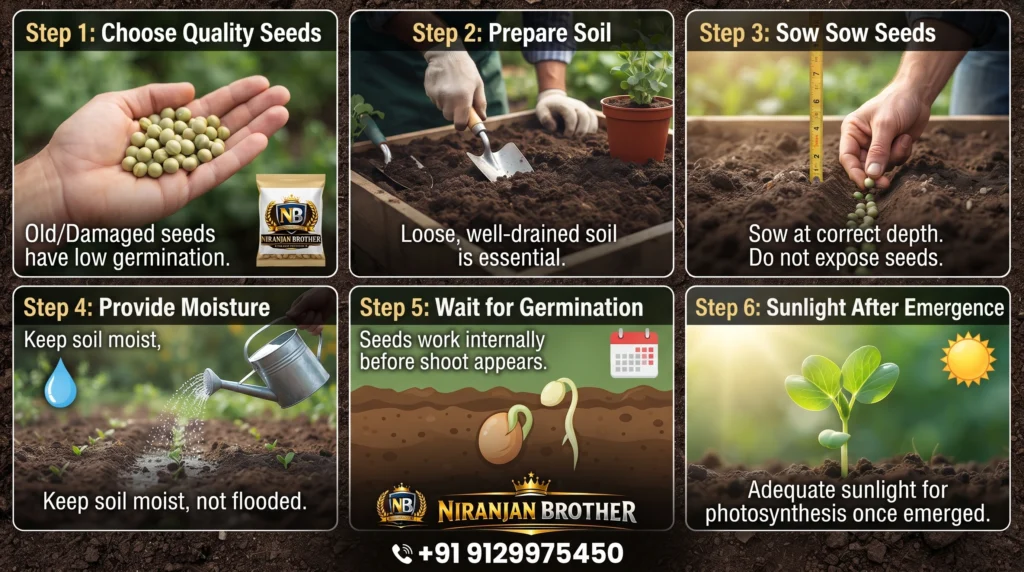
If you want to germinate pea seeds at home, the process is relatively simple.
Step 1: Choose Good Quality Seeds
Start with healthy, good-quality pea seeds.
Old, damaged or poorly stored seeds may have reduced germination performance.
For commercial cultivation, selecting suitable varieties and quality seed is an important part of crop planning.
If you are looking for pea varieties for farming, you can explore our:
Step 2: Prepare the Soil
Use soil that allows water to drain properly.
For pots, use a suitable growing medium that is loose enough for root development.
Avoid soil that becomes hard and compacted.
For field cultivation, proper land preparation and drainage are important parts of pea production.
Step 3: Sow the Seeds at a Suitable Depth
Place the pea seeds below the soil surface rather than leaving them exposed.
The seed should have enough soil coverage to maintain moisture and create a stable environment for germination.
Do not keep digging up the seed to check whether it has germinated.
That can disturb the developing root.
Step 4: Provide Moisture
After sowing, provide sufficient water to moisten the soil.
Do not flood the area.
The soil should remain reasonably moist during the germination period.
Step 5: Wait for Germination
Give the seeds time.
The germination process happens below the soil surface, so you may not immediately see any visible change.
The seed is working internally before the shoot appears above the soil.
Step 6: Provide Sunlight After Emergence
Once the seedlings emerge, make sure they receive adequate sunlight.
This is when light becomes an important part of the plant’s development.
Healthy green leaves need light for photosynthesis.
What Happens Inside a Pea Seed During Germination?
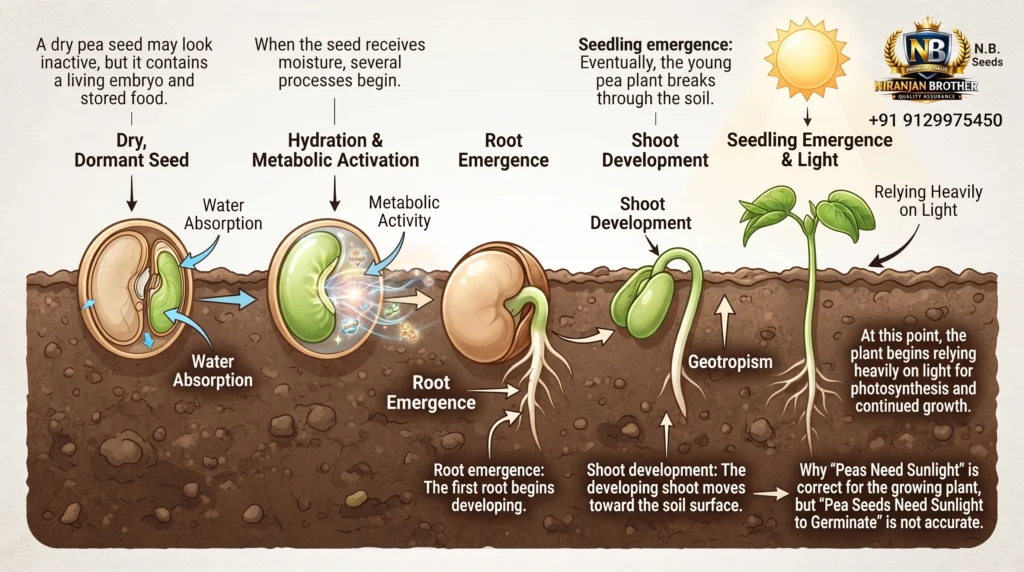
Understanding what happens inside the seed makes the answer to this question easier.
A dry pea seed may look inactive, but it contains a living embryo and stored food.
When the seed receives moisture, several processes begin.
Water absorption
The seed absorbs water and becomes hydrated.
Metabolic activity
Internal biological processes become active.
Root emergence
The first root begins developing.
Shoot development
The developing shoot moves toward the soil surface.
Seedling emergence
Eventually, the young pea plant breaks through the soil.
At this point, the plant begins relying heavily on light for photosynthesis and continued growth.
This is why saying “peas need sunlight” is correct for the growing plant, but saying “pea seeds need sunlight to germinate” is not accurate.
Why Over watering Pea Seeds Can Be Harmful
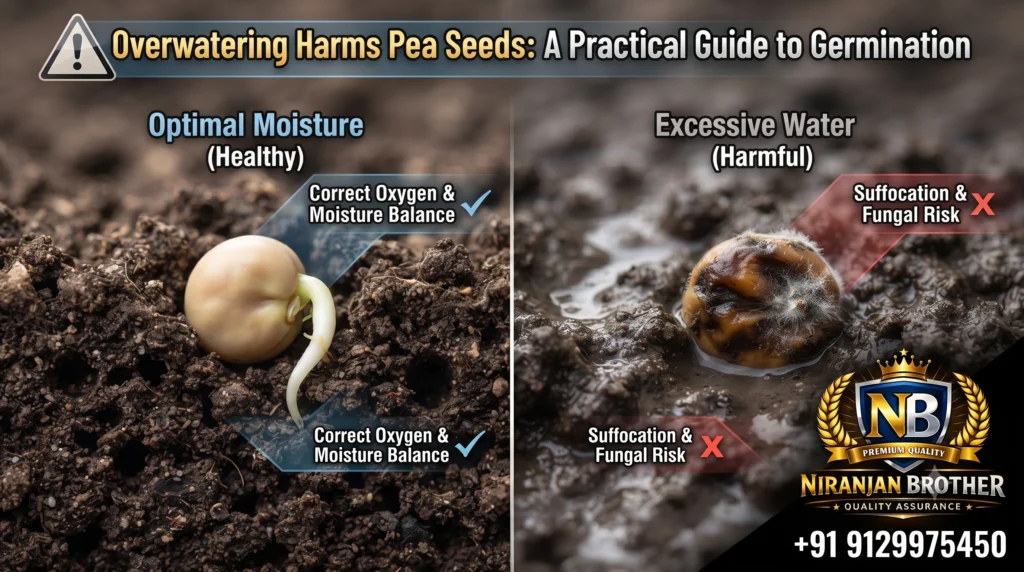
Many people assume that more water means faster germination.
That is not necessarily true.
A seed needs moisture, but it also needs oxygen.
When soil becomes saturated with water, the air spaces in the soil can be reduced. This can create an unfavorable environment around the seed.
Excess moisture can also contribute to fungal and disease problems.
For this reason, gardeners and farmers should avoid unnecessary irrigation immediately after sowing.
ICAR’s pea guidance specifically emphasizes good drainage and adequate soil aeration for field pea cultivation.
The practical approach is simple:
Irrigate according to soil moisture and weather conditions rather than following the idea that more water is always better.
Pea Cultivation During Winter
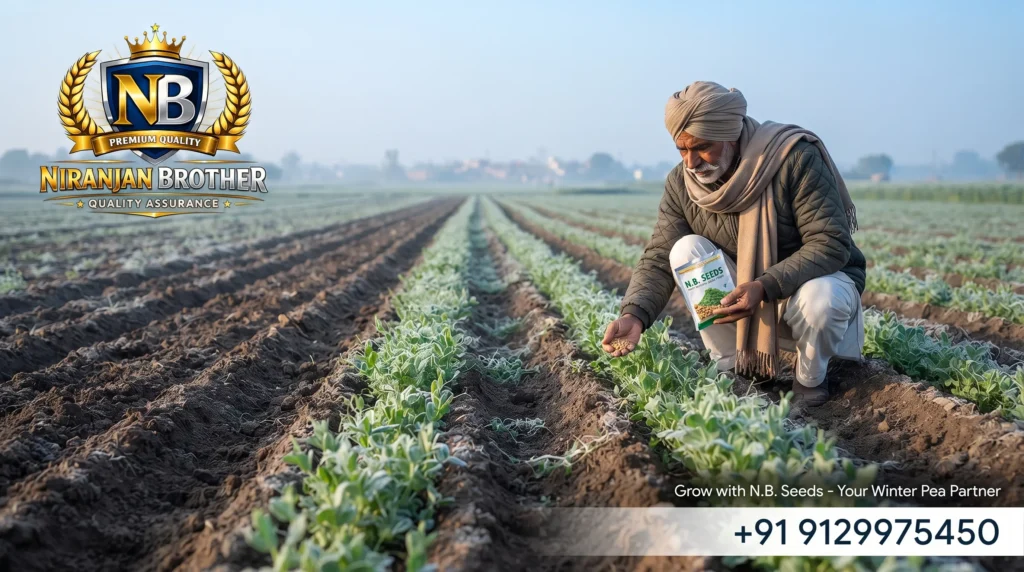
Pea is widely associated with cool-season cultivation.
This is especially relevant for farmers in suitable parts of northern India.
Pea production commonly takes place during the cooler months, although the exact sowing window depends on region and variety.
For example, ICAR’s field-pea advisory identifies October to mid-November as an important sowing period under the conditions covered by its recommendation. ICAR has also reported vegetable pea cultivation beginning with sowing in the last part of October in Uttar Pradesh.
This explains why pea cultivation is commonly seen during the winter season.
For farmers planning commercial production, local recommendations should be considered before selecting the exact sowing date.
Do Pea Seeds Need Darkness to Germinate?
It is better to say that pea seeds do not require light rather than saying that they strictly require complete darkness.
There is an important difference.
Pea seeds are normally covered with soil after sowing. Therefore, they naturally germinate underground without direct sunlight.
The important requirements are:
- Adequate moisture
- Oxygen
- Suitable temperature
- Healthy seed
- Suitable soil conditions
So, there is no need to place pea seeds in darkness as a special germination technique.
Simply sow them correctly in the soil.
Do Pea Seeds Need Sunlight After Germination?
Yes.
After the seedling emerges, sunlight becomes important.
The leaves need light to carry out photosynthesis.
Without sufficient light, seedlings may become weak, pale or stretched as they try to reach available light.
For outdoor pea cultivation, choosing a location with good sunlight is therefore important.
Utah State University Extension recommends full sun for peas, particularly for good production.
Common Mistakes When Germinating Pea Seeds
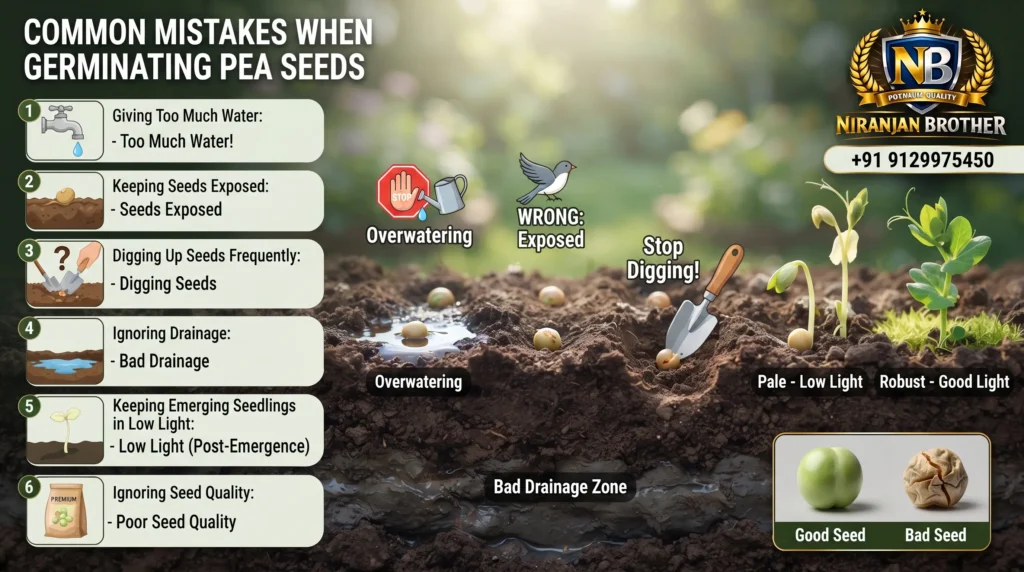
1. Giving Too Much Water
More water does not automatically mean better germination.
Keep the soil moist but avoid water logging.
2. Keeping Seeds Exposed
Pea seeds should normally be sown into the soil at an appropriate depth rather than left exposed on the surface.
3. Digging Up Seeds Frequently
Do not disturb seeds repeatedly to check whether roots have developed.
4. Ignoring Drainage
Poor drainage can create problems even if the seed itself is healthy.
5. Keeping Emerging Seedlings in Low Light
Although the seed does not require light for germination, the young plant needs adequate light after emergence.
6. Ignoring Seed Quality
Good cultivation practices cannot fully compensate for poor-quality or badly stored seed.
Pea Seeds: Germination vs Plant Growth
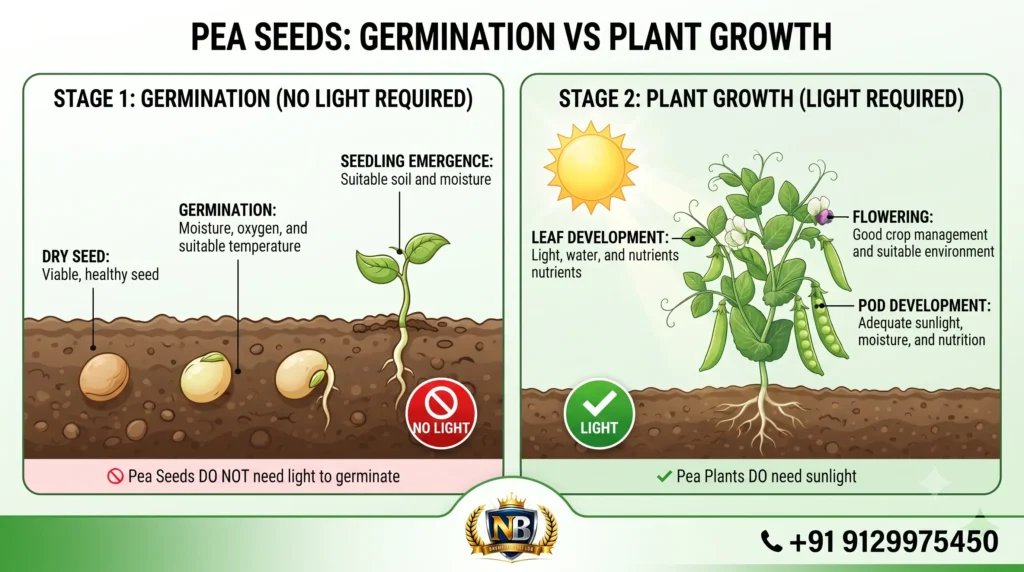
The easiest way to understand the entire topic is to compare the two stages.
| Stage | Main Requirement |
|---|---|
| Dry seed | Viable, healthy seed |
| Germination | Moisture, oxygen and suitable temperature |
| Root development | Moisture, oxygen and suitable soil |
| Seedling emergence | Suitable soil and moisture |
| Leaf development | Light, water and nutrients |
| Flowering | Good crop management and suitable environment |
| Pod development | Adequate sunlight, moisture and nutrition |
This explains why the question “Do pea seeds need light to germinate?” has a different answer from “Do pea plants need sunlight?”
The first answer is no.
The second answer is yes.
Why This Matters for Farmers

For farmers, understanding germination requirements can prevent unnecessary irrigation and poor seed placement.
Pea cultivation is not simply about putting seeds into soil and adding large amounts of water.
A good crop begins with the right combination of:
- Suitable variety
- Quality seed
- Correct sowing time
- Suitable soil
- Proper moisture
- Good drainage
- Adequate sunlight
- Appropriate crop management
For commercial growers, these factors can influence crop establishment and later production.
At NB SEED, our focus is on supplying quality seeds for wholesale requirements and supporting buyers looking for different seed varieties.
Frequently Asked Questions About Pea Seed Germination
Do pea seeds need light to germinate?
No. Pea seeds generally do not need light to start germinating. They need adequate moisture, oxygen and a suitable temperature. After the seedling emerges, light becomes important for healthy plant growth.
Do pea seeds need sunlight?
The seed does not need direct sunlight for germination. However, the pea plant needs adequate sunlight after emergence for photosynthesis, healthy leaves and crop development.
Can pea seeds germinate in darkness?
Yes. Pea seeds can germinate underground without direct sunlight. In normal cultivation, the seeds are covered with soil and germinate beneath the surface.
How much water do pea seeds need?
Pea seeds need enough moisture to begin germination, but excessive water can be harmful. Keep the soil moist rather than waterlogged.
Can I grow peas in a pot?
Yes. Peas can be grown in pots and containers when they have suitable soil, adequate moisture, drainage and enough sunlight after emergence.
Can peas grow in full sunlight?
Yes. Pea plants generally perform well in full-sun conditions. Adequate sunlight is particularly important after the seedlings emerge.
Can pea seeds grow in any soil?
Peas can tolerate different soil conditions, but good drainage and suitable soil structure are important. Well-drained soil is generally preferred for successful pea cultivation.
Is winter suitable for pea cultivation?
Peas are a cool-season crop and are commonly cultivated during cooler months in suitable regions. The exact sowing period depends on location, variety and local conditions.
Can too much water damage pea seeds?
Yes. Excessive moisture and water logging can reduce the availability of oxygen around the seed and create unfavorable conditions for germination and root development.
What is more important for pea seed germination: sunlight or moisture?
Moisture is much more important during the germination stage. Direct sunlight is not required for the seed to start germinating. Sunlight becomes important after the seedling emerges.
Conclusion:
Once the seedling comes out of the soil, sunlight becomes essential for healthy growth and photosynthesis. That is why pea crops are generally grown in locations where the plants can receive good sunlight.
For farmers and gardeners, the most important point is to maintain the right balance. Keep the soil sufficiently moist, but do not over water it. Provide good drainage, use healthy seeds and give the emerging plants enough sunlight.
Peas are well suited to cool-season cultivation, and they can be grown in fields, gardens, pots and other suitable growing spaces when basic crop requirements are managed properly.
If you are planning pea cultivation, remember this simple formula:
Healthy Seed + Moist Soil + Oxygen + Suitable Temperature + Sunlight After Emergence = Better Pea Plant Establishment
For commercial seed requirements, you can explore the pea varieties available from NB SEED and select varieties according to your farming requirements and local growing conditions.